The "Teacherless" School: Reality Check or Sci-Fi Fantasy for Your Child?

We live in an era where AI can write poetry, diagnose diseases, and compose symphonies. So, it's natural for parents to ask a once-unthinkable question: Could a school operate effectively without human teachers? It’s a concept that is both fascinating and terrifying for parents navigating the education of their children.
Is this the inevitable future, an educational utopia powered by perfect algorithms? Or is it a fundamental misunderstanding of how human children learn and thrive? Let's break down the reality for Indian families, beyond the science-fiction headlines.
What Does a "School Without Teachers" Even Mean?
The "teacherless" concept generally means a shift from a "sage on the stage" (a traditional teacher delivering content) to a "guide on the side" (AI-powered software that creates hyper-personalized learning paths for each student). Students learn at their own pace, and software provides instant, data-driven feedback.
In this model, any present "educators" are facilitators. They manage the technology and handle logistics but do not engage in deep, specialized content instruction. Proponents argue this could democratize high-quality education and make it incredibly affordable, especially in areas with teacher shortages.
Why This Idea is Gaining Traction Now
This theoretical model isn't just born from the imagination of tech billionaires. There are real-world pressures:
- Chronic Teacher Shortages: Many regions globally, including parts of India, struggle to attract and retain qualified teachers, especially in critical areas like math, science, and languages.
- The Success of Online Learning: Platforms like DX Coaching (dx-coaching.web.app) demonstrate that high-quality, structured online courses can be incredibly effective, leading some to ask if human instruction is always mandatory.
- The Rise of Personalized AI: New tools promise to adapt to a child's learning speed more accurately than any human teacher managing 30-40 students could.
It's a seductive vision: perfect education for every child, on demand, for pennies. But is it realistic?
The Human Factor: What Technology Cannot Do
The short answer is: No, a successful "school" is not possible without human teachers. This is not because technology isn't amazing, but because education is about far more than information transfer.
This isn't just sentimentality; global data confirms it. The UNESCO Global Education Monitoring Report (2023/24) specifically stated that technology should supplement, not supplant, human interaction. Why?
1. Emotional and Moral Development
A computer can grade a math quiz, but it cannot tell when a student is anxious about their grades. A program cannot teach empathy, resilience, or how to handle conflict fairly. These critical life skills are caught through human example and mentorship, not taught via algorithm.
2. Critical Thinking and Complexity
Software is superb for structured, rule-based learning (like grammar or simple algebra). But it struggles with complex, creative problem-solving or interpreting subtle nuance—the very "soft skills" that the NEP 2020 highlights as the future of workforce preparedness.
3. Creating a Community
A school isn't just a place to learn; it's a child's first society. Teachers don't just instruct; they inspire and foster a sense of belonging. Can AI replicate the encouragement of a coach or the genuine mentorship of an art teacher who believes in a student's talent?
The Indian Perspective: Technology as a Partner, Not a Principal
In India, where we value the Guru-Shishya tradition and also lead the world in EdTech adoption, the most realistic future is not the "teacherless school," but the AI-empowered school.
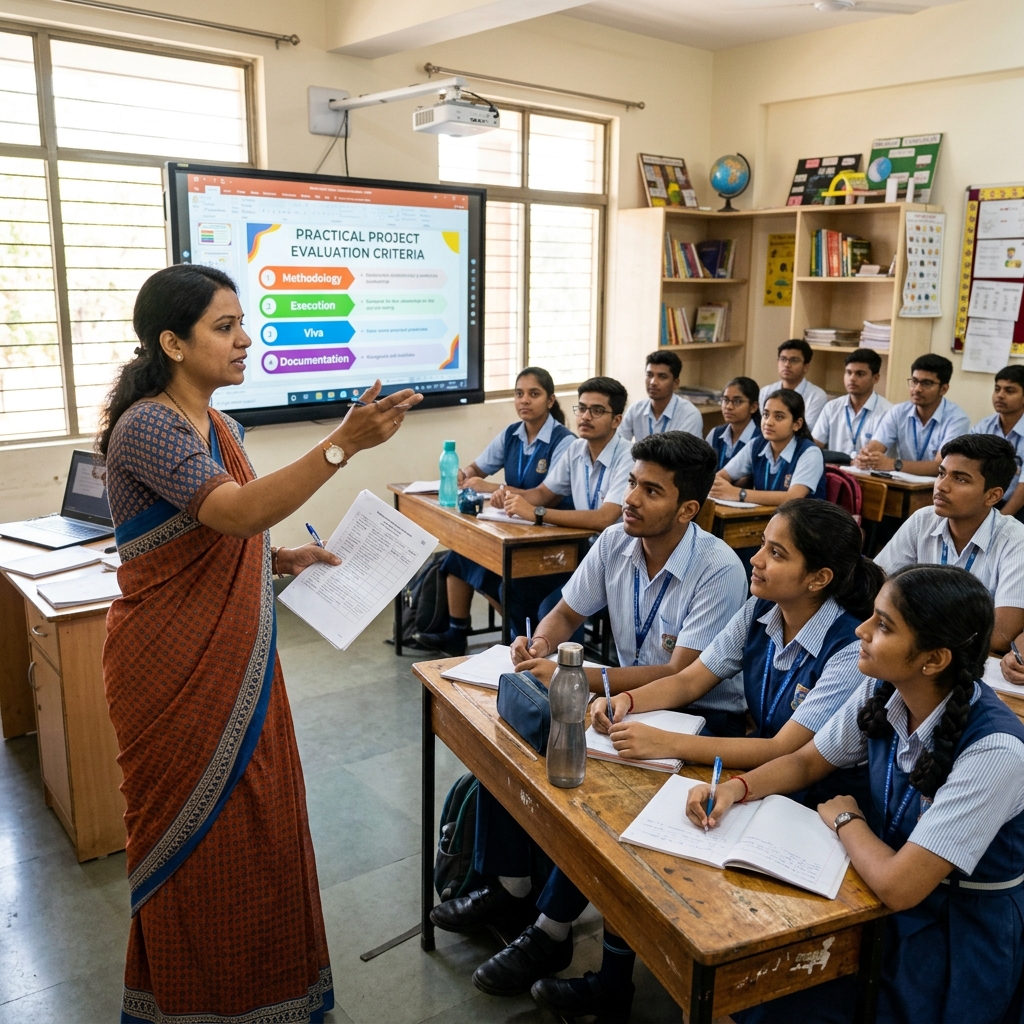
Technology can free up teachers from routine tasks like grading, allowing them to focus on the things that humans do best: individualized mentoring, creative projects, and pastoral care. Imagine a school where AI manages information, so the human teacher can focus entirely on inspiration.
How to Find a "Future-Ready" School for Your Child
The most important takeaway for parents isn't about choosing between a robot or a human. It's about finding a school that understands how to use technology to amplify human teaching, not replace it.
When you're comparing schools on DextroCampus (dextrocampus.com), don't just look at the number of smartboards. Look for a school that values its teachers. Look for a strong professional development program and a low teacher-to-student ratio. A great school uses digital tools intelligently but knows that its greatest asset is, and will always be, its exceptional human faculty.
Technology will continue to transform education, but the teacher remains the heart of the learning process.
Tags:
Get Weekly Insights
Join 10k+ parents getting smarter about education.