
Nursery Admission Interview: Common Questions Parents Should Expect
Nursery Admission Interview: Common Questions Parents Should Expect
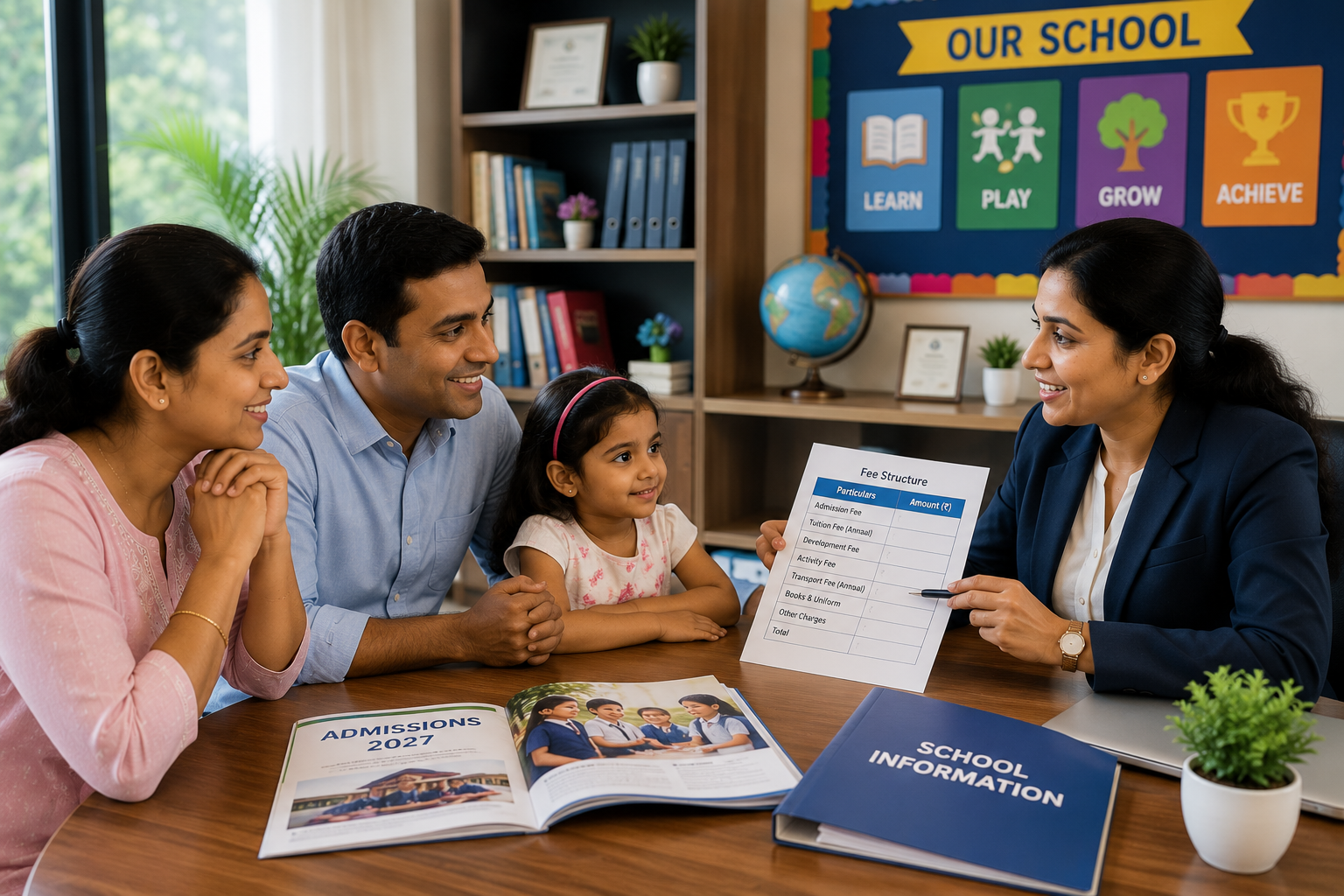
A Nursery admission interview can make parents nervous, especially when their child is starting school for the first time. But in many cases, parents should not think of it as a formal examination. Schools can use an interaction to understand the child, speak with parents and learn whether the family's expectations match the school's approach.
The exact admission process differs between schools. Some may conduct a parent interaction, some may involve the child, and others may use a different selection process altogether. Parents should therefore check the school's official admission instructions before preparing.
Quick Answer: What Questions Are Asked in a Nursery Admission Interview?
There is no universal Nursery interview questionnaire. Parents may encounter questions about:
- The child's age and background
- Previous preschool experience
- Daily routine
- Eating and sleeping habits
- Toilet independence
- Communication
- Social behaviour
- Interests and activities
- Parents' expectations
- Why the family selected the school
- How parents plan to support the child's education
If the child is included, questions or activities may be simple and age-appropriate, such as:
- “What is your name?”
- “Can you tell me about your family?”
- “What colour is this?”
- “Which toy do you like?”
- Identifying familiar objects
- Following a simple instruction
- Singing a familiar rhyme
Parents should prepare their child for comfort and communication—not memorised answers.
Does Every School Conduct a Nursery Admission Interview?
No.
Parents should first find out whether the school actually has an interview or interaction.
Possible admission procedures can include:
- Parent interaction
- Child interaction
- Orientation
- Informal observation
- School-readiness activity
- Application-based selection
- Another school-specific process
The phrase “Nursery admission interview” should therefore not be interpreted as meaning that every school conducts a formal interview.
Before preparing, ask the school:
“Could you please explain what the admission interaction involves and whether both the parent and child need to attend?”
That simple question can prevent unnecessary preparation and anxiety.
Why Do Schools Conduct Nursery Interactions?
The purpose can vary by school.
An interaction may help the school understand:
- The child's background
- Communication style
- Previous preschool experience
- Daily routine
- Family expectations
- Any support the child may need
- Whether parents understand the school's approach
For a young child, a school may also want to observe how the child responds to an unfamiliar environment.
Parents should not assume that the school is looking for a “perfect” child.
Common Nursery Admission Interview Questions for Parents
1. Tell Us About Your Child
This is one of the most natural questions a school may ask.
Parents can briefly describe:
- Child's personality
- Interests
- Favourite activities
- Communication style
- Previous preschool experience
- Areas where the child may need support
Example
“My daughter enjoys drawing, picture books and playing with other children. She is initially a little shy in unfamiliar places but becomes comfortable after some time.”
This is better than giving an exaggerated description.
2. Has Your Child Attended Preschool Before?
If your child has attended preschool, the school may ask about the experience.
Parents can explain:
- Where the child studied
- How long they attended
- What activities they enjoyed
- How they adjusted to the environment
If the child has not attended preschool, simply say so.
There is no need to create a complicated explanation.
3. Why Are You Choosing This School?
Parents should be prepared to explain their decision.
Possible reasons include:
- Location
- School timings
- Learning environment
- Early-years programme
- Teaching approach
- Continuity into higher classes
- Family requirements
Avoid giving an answer that sounds copied from the school's brochure.
Instead, explain what genuinely matters to your family.
4. What Are Your Expectations From the School?
This question gives parents an opportunity to think about what they actually want.
Possible expectations might include:
- A safe environment
- Supportive teachers
- Good communication
- Age-appropriate learning
- Opportunities for play and creativity
- Social development
- A comfortable transition into school
Parents should keep expectations realistic.
Nursery is an early-learning stage. It should not be treated as a race to achieve advanced academic skills.
5. What Does Your Child Like to Do?
Talk about genuine interests.
For example:
- Drawing
- Blocks
- Music
- Stories
- Outdoor play
- Puzzles
- Cars
- Dolls
- Pretend play
- Singing
There is no “correct” hobby.
The purpose is to help the school understand the child.
6. How Does Your Child Behave Around Other Children?
Be honest.
Parents can explain whether their child:
- Enjoys group play
- Takes time to warm up
- Likes sharing
- Needs reminders about taking turns
- Prefers parallel play
- Is comfortable speaking with other children
Don't describe your child as perfect simply because you want admission.
Accurate information can help teachers understand how to support the child.
7. Is Your Child Toilet Trained?
This may be an important practical question for some schools.
The answer should be honest.
If the child is still developing toilet independence, ask the school about its procedure for:
- Toilet assistance
- Accidents
- Changing clothes
- Spare clothing
- Hygiene
Policies can vary, so don't assume what the school will provide.
8. What Is Your Child's Daily Routine?
Parents may be asked about:
- Wake-up time
- Breakfast
- Nap or rest
- Play
- Meals
- Bedtime
A consistent routine can be useful when preparing for school.
If your child's routine is still changing, simply explain that.
9. What Languages Does Your Child Speak at Home?
Schools may ask about the child's home-language environment.
Parents should answer naturally.
There is no need to pretend that a child speaks a language fluently if they do not.
If your child is learning more than one language, explain which languages are used at home.
10. How Does Your Child Communicate Needs?
The school may want to know whether the child can communicate things such as:
- “I need water.”
- “I need help.”
- “I want to use the toilet.”
- “I'm hungry.”
- “I'm tired.”
- “I don't understand.”
If your child is still developing these skills, explain what usually works at home.
Questions a School May Ask About Parents
A Nursery interaction may not focus entirely on the child.
Parents may also be asked about:
Work schedules
This can help the school understand practical arrangements.
Pickup arrangements
The school may want to know who will usually collect the child.
Transport
Parents may be asked whether the child will use:
- School transport
- Private transport
- Parent pickup
- Another authorised caregiver
Parent involvement
The school may ask about expectations regarding:
- Parent meetings
- Communication
- School activities
- Home support
Answer honestly and avoid promising involvement that your family cannot realistically provide.
Possible Questions for the Child
If the child is included in the interaction, questions are usually likely to be simple and familiar.
Examples include:
Basic introduction
“What is your name?”
Age
“How old are you?”
Family
“Who lives at home with you?”
Colours
“What colour is this?”
Objects
“What is this?”
Preferences
“What toy do you like?”
Activities
“What do you like to do?”
Simple instructions
“Can you put the block on the table?”
The exact questions cannot be predicted.
Parents should therefore avoid teaching a fixed script.
How Should Parents Prepare a Child for the Interview?
1. Practise Conversation
Talk with your child naturally.
Ask questions such as:
- “What did you do today?”
- “What did you play with?”
- “Which colour do you like?”
- “Who did you see?”
Let the child answer in their own words.
2. Practise Simple Introductions
Your child can gradually become comfortable saying:
“My name is ___.”
and:
“I am three years old.”
Don't repeatedly drill these sentences.
A natural introduction is enough.
3. Use Role-Play
Pretend that you are the teacher.
Say:
“Hello! What is your name?”
Then let your child respond.
You can also practise:
“Can you show me your favourite toy?”
Keep it playful.
If the child loses interest, stop.
4. Read Picture Books
Picture books provide opportunities to discuss:
- Colours
- Animals
- Objects
- People
- Stories
- Feelings
This can strengthen everyday communication without feeling like interview preparation.
5. Practise Following Instructions
Use simple household activities.
For example:
“Please bring your book.”
Later:
“Put your book on the table and bring the crayons.”
This can make classroom-style instructions more familiar.
What Parents Should NOT Teach
Avoid teaching your child to give scripted answers such as:
“My school is the best school.”
or:
“I love studying for five hours every day.”
A child who repeats memorised answers may actually appear less comfortable than a child who communicates naturally.
Also avoid forcing your child to memorise:
- Long introductions
- School facts
- Teacher names
- Complex vocabulary
- Advanced academic answers
Nursery admission preparation should remain age-appropriate.
What If Your Child Does Not Answer?
Don't panic.
A young child may remain quiet because:
- The environment is unfamiliar
- The teacher is new
- The child is shy
- The child is tired
- The parent is watching
- The situation feels different from home
Silence in one interaction does not necessarily tell the whole story about the child.
Parents can encourage gently:
“It's okay. You can take your time.”
Avoid answering every question immediately on the child's behalf.
Give the child a chance to respond.
What If Your Child Cries?
Crying does not automatically mean that your child is not ready for school.
The situation is unfamiliar, and some children need more time.
Parents should:
- Stay calm
- Avoid scolding
- Avoid embarrassment
- Reassure the child
- Follow the school's instructions
- Allow the teacher to interact appropriately
If the school is experienced with young children, staff may have their own process for helping the child settle.
What Parents Should Wear and Bring
If the school has not specified a dress code, parents generally do not need to make the interaction unnecessarily formal.
The priority should be:
- Clean, comfortable clothing
- Child's comfort
- Required documents
- Application details
- Any school-requested records
Check the school's communication before the appointment so you don't arrive without required documents.
DextroCampus already has a dedicated article on School Admission Documents Required in Maharashtra (2027), which can serve as a supporting resource when preparing your admission folder.
Questions Parents Should Ask the School
An admission interaction should not be one-sided.
Parents can also ask useful questions.
About the child
- How does the school help new children settle?
- How are shy children supported?
- How are children's individual needs communicated to parents?
About the classroom
- What does a typical Nursery day look like?
- How much time is dedicated to play?
- What types of activities do children do?
About communication
- How does the school communicate with parents?
- How are concerns about a child communicated?
About practical matters
- What are the school timings?
- What is the pickup procedure?
- Is transport available?
- What is the current fee structure?
Asking thoughtful questions can help parents decide whether the school is actually suitable.
10 Mistakes Parents Should Avoid
1. Coaching the child too much
Over-preparation can make the interaction stressful.
2. Comparing the child with others
Every child develops differently.
3. Speaking for the child constantly
Give the child opportunities to respond independently.
4. Hiding important information
Be honest about the child's routine, communication and support needs.
5. Treating the interaction like a competitive exam
The purpose may be understanding and interaction rather than academic testing.
6. Scolding the child for mistakes
A nervous child may need reassurance, not correction.
7. Promising unrealistic parental involvement
Be honest about what your family can manage.
8. Ignoring the school's instructions
Check the appointment details and required documents beforehand.
9. Focusing only on getting admission
The interaction is also an opportunity for parents to evaluate the school.
10. Assuming every school asks the same questions
Admission procedures vary. Always follow the individual school's instructions.
Nursery Admission Interview Preparation Checklist
For Parents
- Know the child's basic details
- Understand the child's daily routine
- Be ready to explain why you selected the school
- Understand your child's interests
- Be honest about the child's strengths and support needs
- Know the pickup and transport arrangement
- Carry requested documents
- Prepare a few questions for the school
For the Child
- Practise saying their name
- Practise simple conversation
- Practise basic instructions
- Encourage independent communication
- Read picture books
- Practise colours, objects and simple concepts through play
- Visit the school if possible
- Avoid memorising scripted answers
One-Day-Before Interview Checklist
The evening before the interaction:
- Keep documents ready.
- Check the appointment time.
- Prepare comfortable clothes.
- Keep the child's bag or essentials ready if required.
- Let the child sleep at their normal time.
- Avoid intensive practice sessions.
- Talk positively about the school.
- Don't repeatedly remind the child that they “must answer correctly.”
A relaxed evening is usually more useful than last-minute drilling.
What Parents Should Say to the Child
Instead of:
“You have to answer everything.”
Try:
“Tomorrow we are going to meet your teacher. You can say hello, talk to them and ask for help if you need it.”
This communicates confidence without creating pressure.
Frequently Asked Questions
What questions are asked in a Nursery admission interview?
Questions vary by school. Parents may be asked about the child's background, routine, interests, communication, previous preschool experience and family expectations. A child may be asked simple questions about their name, age, family, colours or familiar objects.
Is Nursery admission interview compulsory?
Not necessarily. Schools can use different admission procedures. Parents should check the school's official admission instructions.
How can I prepare my 3-year-old for a Nursery interview?
Practise simple conversation, introductions, following instructions and everyday communication through play. Avoid memorising answers.
What if my child is shy during the interview?
Stay calm and allow the child time to become comfortable. Avoid forcing the child to answer immediately.
Should I tell my child the correct answers beforehand?
It is better to build familiarity with basic concepts than to teach scripted responses. The child should be able to communicate naturally.
What should parents wear for a Nursery admission interview?
Unless the school specifies otherwise, choose neat, comfortable clothing. The child should also be comfortable rather than dressed in a way that causes distraction.
Should parents answer questions for their child?
Parents can clarify when necessary, but they should give the child a reasonable opportunity to answer simple questions independently.
What documents should parents bring?
Bring the documents specifically requested by the school. Common admission documents can include birth records, photographs and parent/address documents, but the exact list varies.
Can parents ask questions during the interview?
Yes. Parents can use the opportunity to understand the school's routine, communication, safety, transport, fees and approach to helping young children settle.
Final Takeaway
A Nursery admission interview should not be treated like a high-pressure entrance examination.
The best preparation is to help your child become comfortable with simple conversation, instructions, routines and new environments.
Parents should also prepare themselves. Know your child's routine, interests and needs, understand why the school is being considered, carry the requested documents and prepare thoughtful questions.
Most importantly, let your child be themselves.
A young child may be shy, talkative, quiet, curious or nervous during an unfamiliar interaction. One short meeting cannot capture everything about a child's personality or potential.
And because admission procedures differ between schools, always confirm whether an interaction is required, who needs to attend, what documents are needed and how the school conducts its selection process.
Last Updated: August 2026
Tags:
Get Weekly Insights
Join 10k+ parents getting smarter about education.