Kids Planet School 2027 Admission Guide: Preschool & Primary
Navigating the Kids Planet High School Admission Workflow for 2027
The Kids Planet High School admission process for the 2027 academic session operates under a structured, multi-stage enrollment framework aligned with CBSE Portal transparency norms and NEP 2020 foundational learning standards. Parents seeking preschool and primary entry must navigate online registration, developmental screening, personal interaction rounds, and final merit-based allocation before the seats are confirmed and fee structures are locked. The entire workflow is designed to assess cognitive readiness, parental engagement, and alignment with the school's experiential learning pedagogy, ensuring that only candidates demonstrating genuine developmental preparedness are admitted into the 2027 cohort.
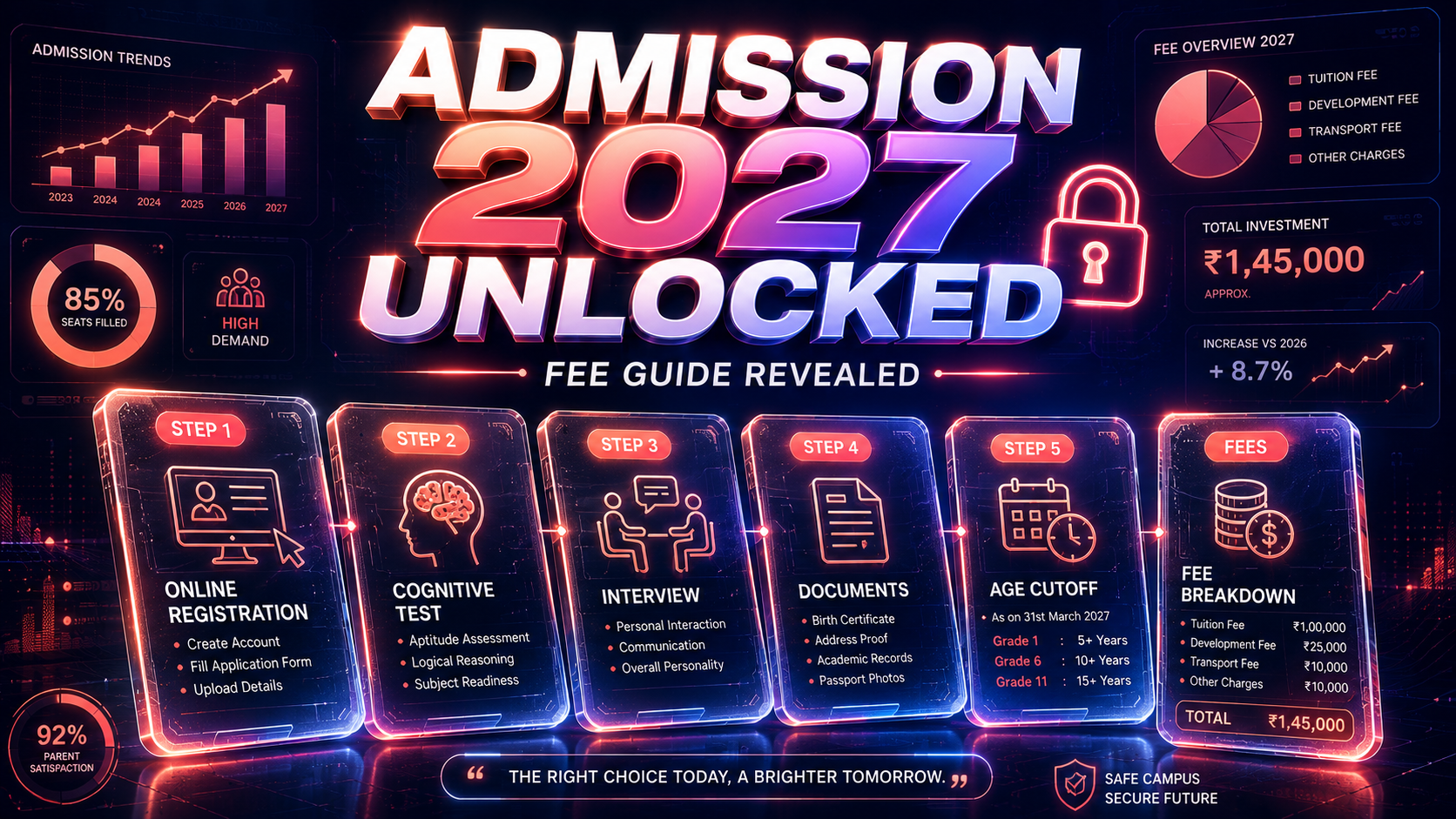
Registration typically opens between late January and early February 2027, with the final cutoff extending into March 2027. The school employs a digital-first approach, requiring parents to create accounts on the official admission portal, upload scanned documents, complete developmental milestone questionnaires, and schedule age-appropriate interaction sessions. Each stage carries weightage, and premature or incomplete submissions are immediately flagged for rejection under the 2027 compliance guidelines.
Decoding Eligibility Criteria and NEP 2020 Compliance Standards for 2027 Entries
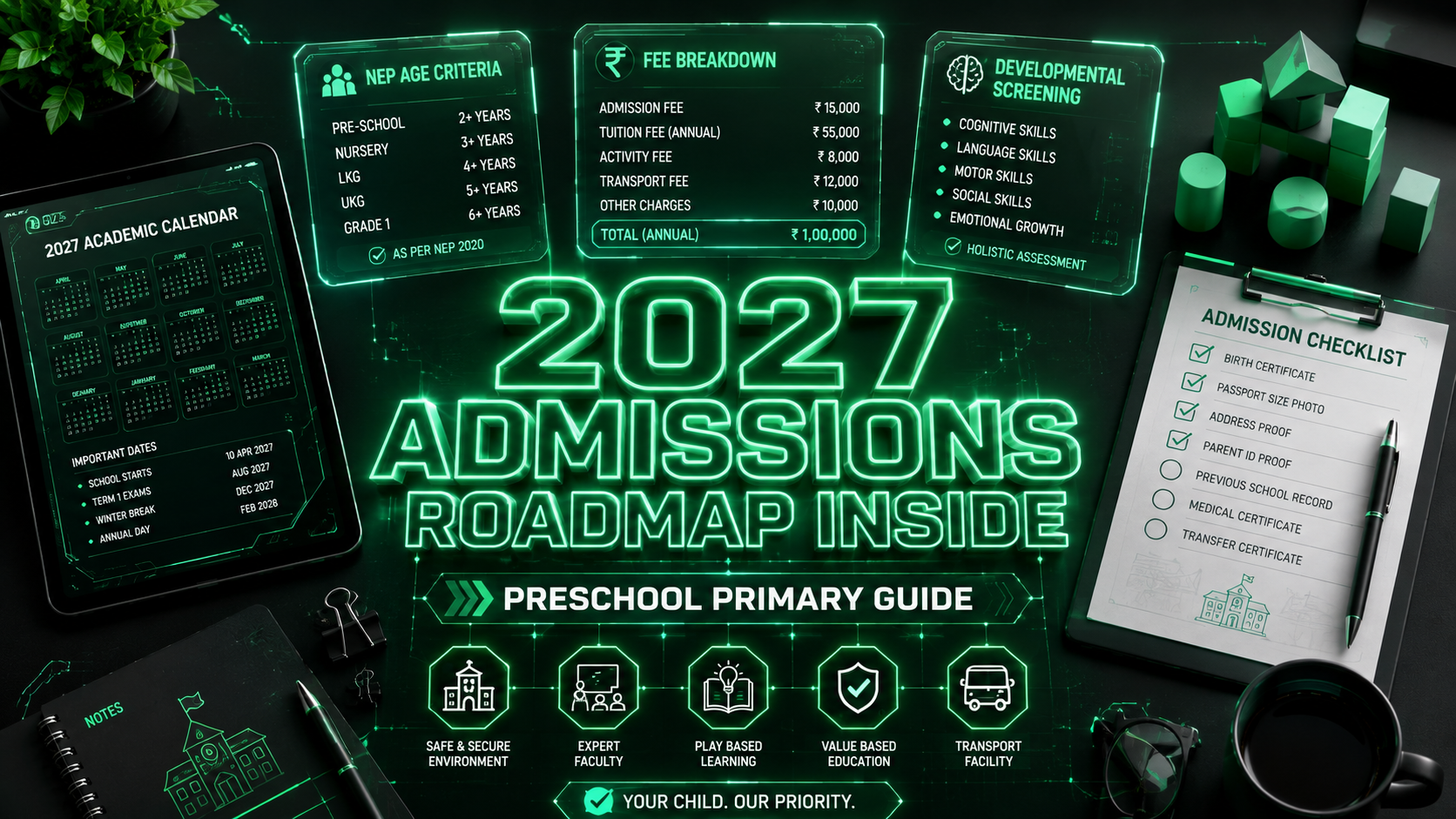
Answer Capsule: Kids Planet High School 2027 preschool and primary admissions follow NEP 2020 age brackets: Pre-KG (3 to 4 years), KG (4 to 5 years), Class 1 (5 to 6 years), and Class 2 (6 to 7 years). Children must fall strictly within the prescribed age window as of March 31, 2027, possess a valid birth certificate, and clear the developmental readiness assessment conducted by certified early childhood educators. Late-born children exceeding the upper age limit are ineligible under the 2027 norms.
Under the NEP 2020 foundational stage framework (Pre-Primary to Class 2, also known as Foundation Stage), the NCERT NIC has mandated age-specific learning outcomes that directly influence how institutions like Kids Planet High School evaluate incoming candidates. The 2027 eligibility matrix requires applicants to demonstrate age-appropriate language comprehension, fine motor coordination, social interaction capacity, and basic numeracy awareness depending on the grade level pursued.
Parents must verify that their child's date of birth aligns with the cutoff date of March 31, 2027. The Ministry of Education's education.gov.in portal has reinforced strict age-compliance to prevent over-placement, which NEP 2020 research links to reduced long-term academic engagement. Documentation demands include the child's birth certificate, Aadhaar-linked proof for parents, previous school transfer certificates (where applicable), vaccine records as per UGC and state health norms, and passport-size photographs. Any mismatch between submitted age details and official documents triggers automatic disqualification during the 2027 screening phase.
Structuring Your Child's Developmental Readiness Assessment Before Application Submission
The developmental readiness round is the most critical filtering mechanism in the Kids Planet High School 2027 admission pipeline. Trained early childhood specialists evaluate five core competency domains: motor skill development, language and communication, cognitive problem-solving, social-emotional regulation, and self-care independence. For Pre-KG and KG aspirants, the assessment is activity-based and conducted in a playroom environment to reduce anxiety. For Class 1 and Class 2 candidates, educators assess foundational reading, basic counting, shape recognition, and ability to follow structured classroom instructions.
Parents preparing candidates should focus on structured home learning aligned with NCERT-prescribed foundational stage activities rather than rote academic drilling. The 2027 evaluation rubric explicitly penalizes over-accelerated rigid academic preparation that masks underlying developmental gaps. Natural exploration, storytelling, and group interaction practice yield measurable advantages during this screening stage.
Document Verification Protocols and Fee Breakdown for the 2027 Admission Cycle
Answer Capsule: The 2027 Kids Planet High School admission fee structure includes a non-refundable application fee ranging from 1,500 to 3,000 rupees, a one-time development fee between 25,000 and 45,000 rupees, and annual tuition fees approximately between 75,000 and 1,40,000 rupees depending on the grade level. Fee payments are processed exclusively through the official school portal using secure UPI or net banking channels after seat allotment confirmation.
Once initial screening is cleared, candidates enter the document verification and financial commitment phase. The school's accounting department cross-validates every uploaded document against original submissions in person. The 2027 cycle introduces stricter validation checks, including mandatory Aadhaar seeding for siblings already enrolled, parent income declaration for scholarship consideration, and verified digital signatures on the enrollment undertaking form.
| Fee Component | Pre-KG / KG | Class 1 | Class 2 |
|---|---|---|---|
| Application Fee (Non-Refundable) | 1,500 – 2,000 | 2,000 – 2,500 | 2,500 – 3,000 |
| One-Time Development Fee | 25,000 – 30,000 | 30,000 – 35,000 | 35,000 – 45,000 |
| Annual Tuition Fee | 75,000 – 95,000 | 90,000 – 1,10,000 | 1,10,000 – 1,40,000 |
| Sibling Discount | 5 to 10 percent reduction on tuition fee (verified enrollment required) | ||
| Scholarship Eligibility | Merit-based and need-based schemes published on official portal; requires income certificate and prior academic records | ||
Fee structures are published transparently on the official Kids Planet High School website and must be settled within 72 hours of receiving the seat allotment letter. Failure to confirm financial commitment during this window results in forfeiture to the waiting list. Parents accessing detailed financial planning resources can refer to DextroCampus for comparative fee analysis across Indian private institutions offering NEP 2020 compliant early childhood programs.
Avoiding Common Application Rejection Triggers During the 2027 Enrollment Window
Analysis of previous enrollment cycles reveals consistent rejection patterns that parents must actively prevent in 2027. The most frequent triggers include: uploading low-resolution or partially visible document scans, exceeding the prescribed age cutoff by even a single month, providing mismatched parent names across different documents, delaying portal logins past the stated deadline, and attempting offline submissions that the admissions committee no longer accepts. The 2027 system logs every portal action, and incomplete applications cannot be edited after initial submission unless a formal correction request is filed within 48 hours.
- Ensure all scanned documents are in color, under 2MB per file, and clearly legible at standard screen resolution.
- Cross-verify the child's age against the March 31, 2027 cutoff before filling the application form.
- Submit only one application per child to avoid cancellation of both entries under duplicate-submission policies.
- Keep the parent mobile number and email active, as all verification codes and status updates are dispatched digitally.
Case Study Analysis: How Mumbai and Delhi Parents Successfully Secured Kids Planet High School Seats in 2027
Answer Capsule: Successful 2027 admissions typically require completing online registration within the first two weeks of the portal opening, ensuring developmental readiness through consistent home-based play learning aligned with NEP 2020 guidelines, submitting flawlessly verified documents within 48 hours, and demonstrating active parental participation during the interaction round. Early preparation and procedural accuracy remain decisive factors for securing seats.
Mumbai Scenario: A working-parent household in Andheri East registered for KG admission in the first 72 hours of portal opening. The father structured a six-week home-learning routine focused on storytelling, counting games, and social play, while the mother prepared all scanned documents with a checklist approach derived from CBSE Portal compliance templates. During the developmental assessment, the five-year-old demonstrated strong peer interaction and numeracy awareness. The family submitted fee confirmation within 12 hours of receiving the allotment letter, securing their seat without entering the waiting list.
Delhi Scenario: A parent in South Delhi facing a sibling displacement complication applied for Class 2 entry after transferring from another CBSE-affiliated school. The key differentiator was a meticulously prepared transfer certificate portfolio, an income certificate for scholarship consideration, and a candid parental interaction where both guardians articulated their alignment with Kids Planet High School's experiential framework. The admissions committee noted the family's genuine pedagogical understanding, and the candidate was placed directly into the primary cohort with a 7 percent tuition discount under the sibling continuity policy.
Understanding the Transition Timeline from Pre-Primary to Class 3 Under NEP 2020 Framework
Answer Capsule: NEP 2020 classifies Pre-Primary through Class 2 as the Foundation Stage, where learning is play-based, multilingual, and competency-focused. Starting Class 3 in the 2027 session, students transition to the Preparatory Stage with structured subject streams, formal assessments, and enhanced digital literacy modules. Parents using the Kids Planet High School admission guide for 2027 should understand this pedagogical shift when selecting the appropriate entry grade for their child.
The NEP 2020 framework represents a structural reorganization of early schooling that directly impacts how Kids Planet High School designs its preschool and primary curriculum. The Foundation Stage (Pre-KG to Class 2) prioritizes experiential learning, multilingual instruction, physical development, and emotional intelligence over traditional examination-based evaluation. This approach is endorsed by NCERT NIC research highlighting improved long-term cognitive retention when foundational years emphasize holistic development.
The Foundation Stage must remain free of homework, grade-based pressure, and high-stakes testing to preserve natural curiosity and prevent early academic burnout in young learners. — NEP 2020 Section 4.3, National Curriculum Framework for School Education
For the 2027 cohort, Kids Planet High School has integrated project-based learning modules, nature immersion activities, and community engagement tasks into the preschool and primary schedule. Parents evaluating whether their child is ready for this pedagogical model should assess the child's attention span, willingness to participate in group activities, and ability to communicate basic needs independently. Resources on DX Coaching provide additional benchmarking data comparing NEP 2020 aligned institutions across major Indian metros.
Frequently Asked Questions: Kids Planet High School Preschool & Primary Admission Guide 2027
Q1: What is the exact age cutoff for Kids Planet High School preschool and primary admissions in 2027?
The cutoff date is March 31, 2027. Pre-KG candidates must be between 3 and 4 years, KG candidates between 4 and 5 years, Class 1 candidates between 5 and 6 years, and Class 2 candidates between 6 and 7 years. Any child exceeding the upper age limit by even one month is ineligible under NEP 2020 enforcement guidelines adopted by the school for the 2027 cycle.
Q2: Can I submit a hard-copy application instead of registering on the online portal for the 2027 session?
No. The Kids Planet High School 2027 admission process is entirely digital. Offline hard-copy submissions are not accepted and will not be processed by the admissions committee. All document uploads, fee payments, and status tracking must occur through the official school admission portal.
Q3: Is there a sibling priority or discount mechanism for the 2027 enrollment round?
Yes. Siblings of currently enrolled students receive priority listing during seat allocation and are eligible for a 5 to 10 percent tuition fee discount. Parents must provide the enrolled sibling's admission ID, verified enrollment status from the school administration, and matching parent Aadhaar details to activate these benefits during the 2027 cycle.
Q4: What happens if my child fails the developmental readiness assessment during the 2027 screening?
Candidates who do not clear the developmental assessment are not immediately rejected. The school offers a six-week development gap period during which parents receive a customized improvement report outlining specific competency areas requiring attention. After this period, a re-evaluation round is conducted. If the child still does not meet the baseline readiness criteria, the application is declined, and parents are advised to reconsider entry timing.
Q5: Are scholarship facilities available for economically challenged families applying in 2027?
Yes. Kids Planet High School publishes need-based and merit-based scholarship schemes annually on its official portal for the 2027 session. Eligibility requires submission of an income certificate issued by a competent government authority, prior academic records (if applicable), and completion of a separate scholarship application form followed by a review by the school's finance and admissions committee.
Secure Your Child's 2027 Admission Slot Today
Parents navigating the Kids Planet High School preschool and primary admission process for 2027 must act promptly, as seats are allocated on a merit-meets-readiness basis with limited capacity. Visit DextroCampus for comprehensive admission strategy checklists, NEP 2020 developmental readiness frameworks, and comparative fee analysis across top Indian early childhood institutions. Plan your application timeline, verify document compliance, and prepare your child's developmental profile well before the portal deadline closes.
Tags:
Get Weekly Insights
Join 10k+ parents getting smarter about education.