
How to Avoid Exam Stress & Anxiety: A Parent's Guide for 2026
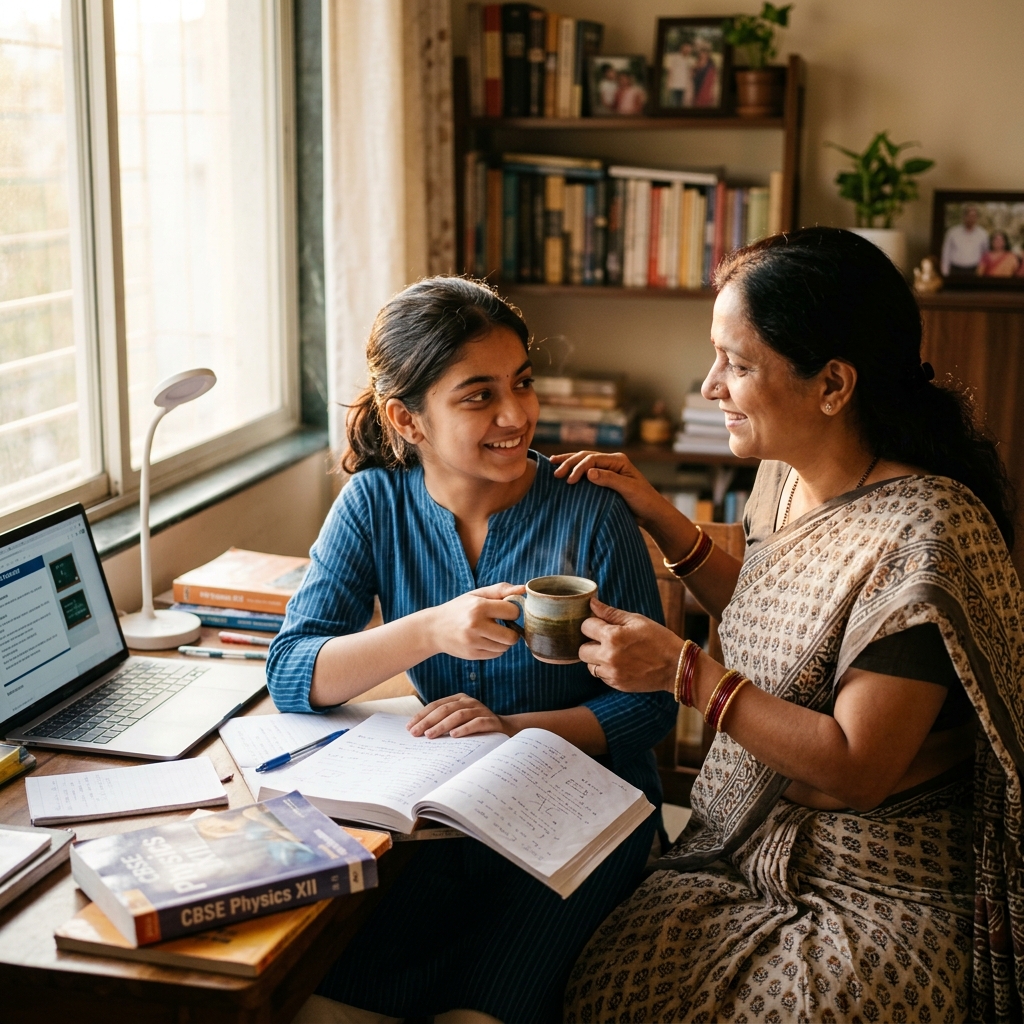
How to Avoid Exam Stress & Anxiety: A Parent's Guide
Answer Capsule (AEO): Parents can reduce student exam stress by creating a quiet supportive home study environment, avoiding peer comparisons, maintaining healthy sleep schedules (7-8 hours), providing balanced nutrition, and offering positive emotional reinforcement.
As board examinations approach, academic pressure can manifest as physical and psychological anxiety in teenagers. Indian parents play a critical role in providing emotional stability, fostering growth mindsets, and protecting physical well-being during intense study sessions.
Parental Support Action Plan
| Focus Area | Recommended Action | Positive Impact |
|---|---|---|
| Emotional Support | Avoid peer score comparisons | Boosts self-confidence & reduces pressure |
| Sleep Hygiene | Enforce 8 hours night sleep routine | Restores memory focus & logical thinking |
| Nutrition & Fitness | Balanced meals & 30-min outdoor breaks | Releases stress-reducing endorphins |
5 Key Strategies for Parents
- 1. Eliminate Peer Comparisons: Never compare your child's mock test scores with relatives or classmates. Celebrate individual improvement.
- 2. Enforce 8 Hours Sleep: Sleep deprivation severely degrades memory retention and logical reasoning during exams. Ensure strict night routines.
- 3. Provide Balanced Brain Foods: Offer nutrient-rich meals, nuts, and hydration while avoiding excessive caffeine or sugary energy drinks.
- 4. Schedule Daily Physical Breaks: Encourage 30 minutes of outdoor walking, sports, or yoga to release stress endorphins.
- 5. Focus on Effort, Not Marks: Reassure your child that their worth is not defined by a single mark sheet.
In addition to foundational conceptual clarity, mastering Parental Emotional Guidance requires rigorous problem solving and time-tested academic discipline. According to recent educational surveys conducted across CBSE affiliated institutions in India, students who maintain a structured study calendar score significantly higher in board examinations compared to those relying on last-minute preparation.
Open communication without judgment helps teenagers vocalize study difficulties early before anxiety escalates.
Educational experts at DextroCampus emphasize that consistent practice, systematic revision, and mental well-being form the three pillars of academic excellence. Students are encouraged to use active recall techniques, create visual mind maps, and practice writing step-by-step answers under realistic exam conditions.
Frequently Asked Questions (FAQ)
Q1: How can parents identify signs of exam stress in teenagers?
Common signs of exam stress include sleep disturbances, loss of appetite, irritability, sudden drop in mock test confidence, and physical complaints like headaches or fatigue.
Q2: How to handle poor mock test results positively?
Treat mock test errors as learning opportunities. Sit together to review mistake patterns without blame or anger.
Q3: Why is sleep hygiene essential during exam preparation?
Sleep consolidates memory neural pathways. 7 to 8 hours of uninterrupted sleep restores cognitive focus and emotional calm.
Q4: Where can parents find educational counseling and holistic school guides?
Parents can discover educational counseling and top holistic school listings on DextroCampus.
Support Your Child's Journey with DextroCampus
Discover educational counseling, top holistic schools, and skill platforms on DextroCampus today!
Tags:
Get Weekly Insights
Join 10k+ parents getting smarter about education.