
Unlocking Potential: How Fear Actually Crushes Your Child's Grades
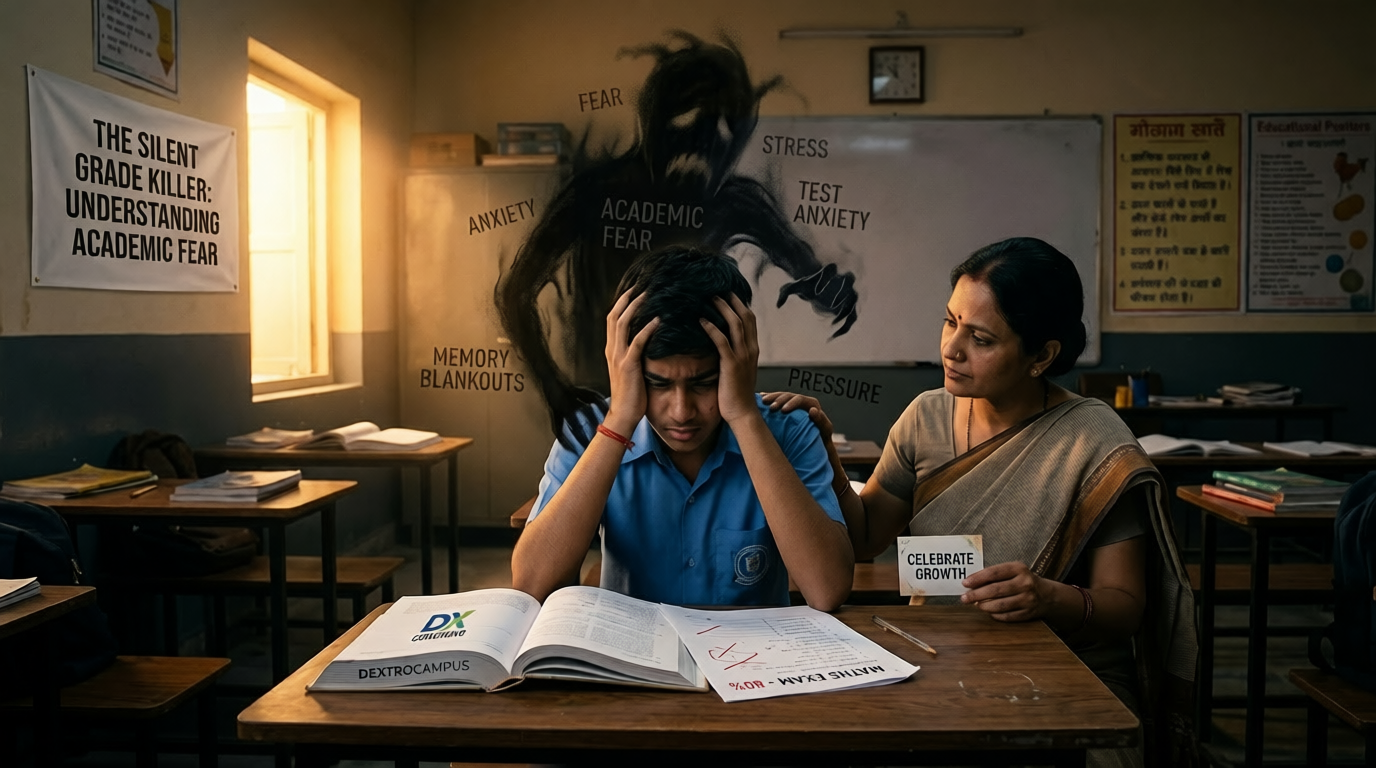
The Silent Grade Killer: Understanding Academic Fear
Every parent wants their child to succeed, to shine, to reach their full potential. We invest in the best schools, seek out top tutors, and meticulously plan their educational journey. But there's a potent, often invisible enemy that can derail even the most prepared student: fear.
A groundbreaking 2024 study in the Indian Journal of Psychological Medicine revealed a startling truth – over 80% of Indian students suffer from exam-related stress and anxiety. This isn't just pre-test jitters; it's a deep-seated fear that can cripple academic performance and cast a shadow over a child's future.
As a parent, understanding this dynamic is crucial. At DextroCampus, where we connect families with exceptional educational institutions, we see firsthand how the right environment and support can make all the difference. But even in the best school, if a student is consumed by fear, their true capabilities may never emerge.
How Fear Paralyses the Learning Brain
When a child experiences significant fear or anxiety related to academics, their brain enters a 'fight-or-flight' mode. The amygdala, responsible for emotional processing, takes over, effectively sidelining the prefrontal cortex – the area crucial for logic, reasoning, memory retrieval, and focus.
Imagine trying to solve a complex math problem or recall historical dates while your brain is sending alarm signals. It's nearly impossible. The consequences are real and measurable:
- Memory Blankouts: Ever heard your child say they "knew everything but just forgot it all" during the exam? That's fear blocking memory access.
- Poor Concentration: Anxiety makes it incredibly difficult to focus on studying, leading to inefficient learning and frustration.
- Slowed Processing: Fear slows down cognitive function, making simple tasks seem overwhelming and time-consuming.
- Test Anxiety: The sheer pressure of the exam situation can trigger physical symptoms like racing heart, sweaty palms, and nausea, further hindering performance.
Recognizing the Signs: Is Your Child Afraid?
The manifestations of academic fear aren't always obvious. While some children might openly express their anxiety, others internalize it. Look for subtle cues:
- Avoidance: Procrastinating on studying, making excuses to skip school, or losing interest in previously enjoyed subjects.
- Physical Symptoms: Frequent headaches, stomach aches, or changes in sleep patterns (insomnia or oversleeping), especially around exam time.
- Irritability and Emotional Outbursts: Uncharacteristic mood swings, quickness to anger, or unexplained tearfulness.
- Perfectionism: An unhealthy obsession with getting everything right, leading to extreme stress over minor mistakes.
- Negative Self-Talk: Frequently expressing thoughts like "I'm going to fail," "I'm not smart enough," or "I can't do this."
Actionable Strategies for Parents: Fostering a Fear-Free Learning Zone
The good news is that parents play a pivotal role in helping their children overcome academic fear. Here are some practical steps you can take:
1. Shift the Focus from Grades to Growth
Stop emphasizing marks as the ultimate measure of success. Celebrate effort, improvement, and resilience instead. Encourage your child to see mistakes as learning opportunities rather than failures. Let them know your love and pride are unconditional, not tied to their report card.
2. Create a Supportive Study Environment
Ensure your child has a quiet, comfortable space to study, free from distractions. Establish consistent routines, but also allow for flexibility and breaks. Be available to offer guidance, but resist the urge to micro-manage or hover.
3. Teach Stress Management Techniques
Equip your child with tools to handle anxiety when it arises. Deep breathing exercises, mindfulness practice, and regular physical activity can be incredibly effective. Encourage healthy eating and sufficient sleep, which are fundamental for stress reduction and brain function.
4. Open Lines of Communication
Foster an environment where your child feels safe discussing their fears and challenges without judgment. Listen actively and validate their feelings. Reassure them that it's okay to feel anxious and that you're there to support them through it.
The Role of the Right Educational Partner
Choosing the right school or coaching institute can significantly impact a child's confidence and attitude towards learning. At DextroCampus, we understand this deeply. We provide comprehensive resources and tools to help you discover, compare, and connect with institutions that prioritise student well-being alongside academic excellence.
For students needing structured, guided online learning, DX Coaching offers quality curated courses designed specifically for Indian students. Their approach focuses on building real academic skills and confidence, providing a supportive virtual classroom environment where students can thrive without the pressures that often breed fear.
Conclusion: Empowering Your Child to Soar
Fear is a powerful force, but it doesn't have to define your child's academic journey. By understanding its impact, recognizing the signs, and implementing supportive strategies, you can empower your child to overcome anxiety and unlock their full potential.
Remember, the goal isn't just to get better grades; it's to nurture a confident, resilient, and lifelong learner. Start today by creating a culture of support, celebrating growth, and partnering with educational resources like DextroCampus and DX Coaching that share your vision for your child's holistic success.
Tags:
Get Weekly Insights
Join 10k+ parents getting smarter about education.