Beyond ChatGPT: How AI is Secretly Rewriting Your Child's Schooling
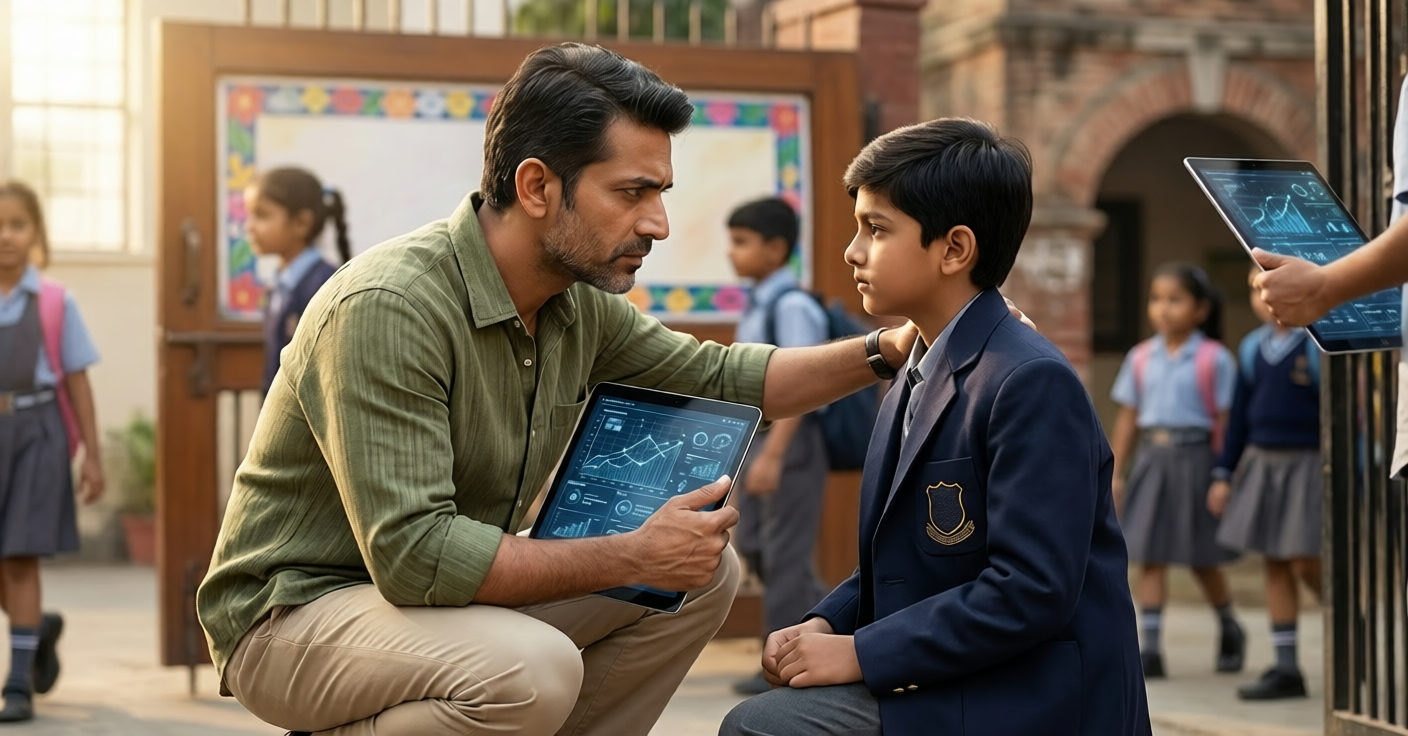
Remember the anxiety of waiting weeks for an exam result? That familiar, pit-of-the-stomach dread might soon be a relic of the past for your child. In the latest FICCI-EY-P AI Adoption Survey 2025, it was revealed that nearly 57% of Indian Higher Education Institutions already have an AI policy in place, and 38% are already using AI for automated grading.
This shift is now cascading rapidly down to schools across India. Artificial Intelligence is no longer just a futuristic concept from sci-fi movies or a tool for university students; it is actively rewriting the rules of assessment and personalized learning in classrooms today. As a parent looking at dextrocampus.com for the best educational foundation for your child, understanding this "silent revolution" is crucial.
Personalized Learning: The "One-Size-Fits-All" Model is Dead
For decades, the standard educational model was designed around the average student. The problem is, no student is "average" in every subject. Some excel at math but struggle with creative writing; others grasp historical narratives quickly but find science formulas daunting. AI is changing this by creating true personalization at scale.
AI-powered adaptive learning platforms are now being integrated into school curricula. These platforms function like digital tutors:
- They analyze how your child interacts with a specific topic.
- If your child answers correctly, the platform increases the complexity of the next question, keeping them challenged.
- If they struggle, the platform automatically drops the difficulty, offers simplified explanations, and tracks the exact learning gap to report to the teacher.
This ensures that your child is neither bored by pace that is too slow nor left behind by a pace that is too fast. This personalized approach is particularly powerful in foundational years (Grades 1–5), ensuring no learning gaps form in reading or basic math—a primary goal of India's National Education Policy (NEP 2020).
Assessments are Moving from "Gotcha!" to "Growth"
Traditional exams were often designed as a singular "gotcha!" moment to catch what a student didn't know. AI is shifting assessments from a tool for sorting students to a tool for helping them grow. This transformation is happening in three main ways:
1. The Instant Feedback Loop
The greatest anxiety for students is not knowing how they performed. AI tools now allow for instantaneous grading of formative quizzes and assignments. According to a 2025 FICCI–EY–P survey, 38% of respondents are already leveraging AI for automated grading. When a child receives feedback the moment they submit a response, they can correct their misunderstanding immediately, rather than waiting weeks and forgetting the context.
2. Formative, Continuous Evaluation
NEP 2020 calls for a move away from high-stakes, end-of-year board exams toward continuous, formative evaluation. AI is the missing key to making this feasible. Teachers can use AI to manage weekly digital "micro-assessments" that provide a continuous data stream of a student’s understanding, rather than relying on one stressful exam. This significantly reduces exam pressure.
3. Early Detection of Learning Gaps
One of the most powerful uses of AI in schools is predictive analytics. AI systems analyze performance data over weeks and months to identify subtle patterns. For example, an AI could notice that a student has mastered algebra but consistently struggles with geometry formulas, perhaps indicating a gap in their spatial visualization skills. By alerting the teacher before a major exam, the student can receive targeted intervention immediately.
What Parents Must Look for During Admissions
As you navigate the school selection process on dextrocampus.com, you need to look beyond grand facade architecture and swimming pools. When touring schools or comparing them online, ask direct questions about their digital strategy:
- Teacher Training: How are teachers being trained to use data-driven insights from AI assessments? (A tool is only as good as the teacher using it).
- Adaptive Platforms: Does the school use any adaptive learning software to manage personalized pace?
- Digital Literacy: How is the school teaching children not just how to use AI, but the ethical considerations and critical thinking required to evaluate it?
For parents who realize their children need extra structured help to build genuine competence, particularly in subjects where AI has revealed significant foundational gaps, platforms like DX Coaching (dx-coaching.web.app) offer curated, guided online courses designed specifically for Indian students wanting to excel in competitive and board exams.
Conclusion
The goal of AI in schools is not to turn our children into emotionless robots or replace the irreplaceable role of a caring human teacher. Rather, the best Indian schools are using AI to make learning more efficient, less stressful, and deeply personal. It frees up the teacher from repetitive grading to do what they do best: mentor, inspire, and guide your child’s emotional and social development.
Is the school you are considering future-ready? Discover, compare, and connect with India's best technology-enabled schools on dextrocampus.com today.
Tags:
Get Weekly Insights
Join 10k+ parents getting smarter about education.