
Mastering the 2026 Admissions Landscape: Leverage the Enrollment Cliff
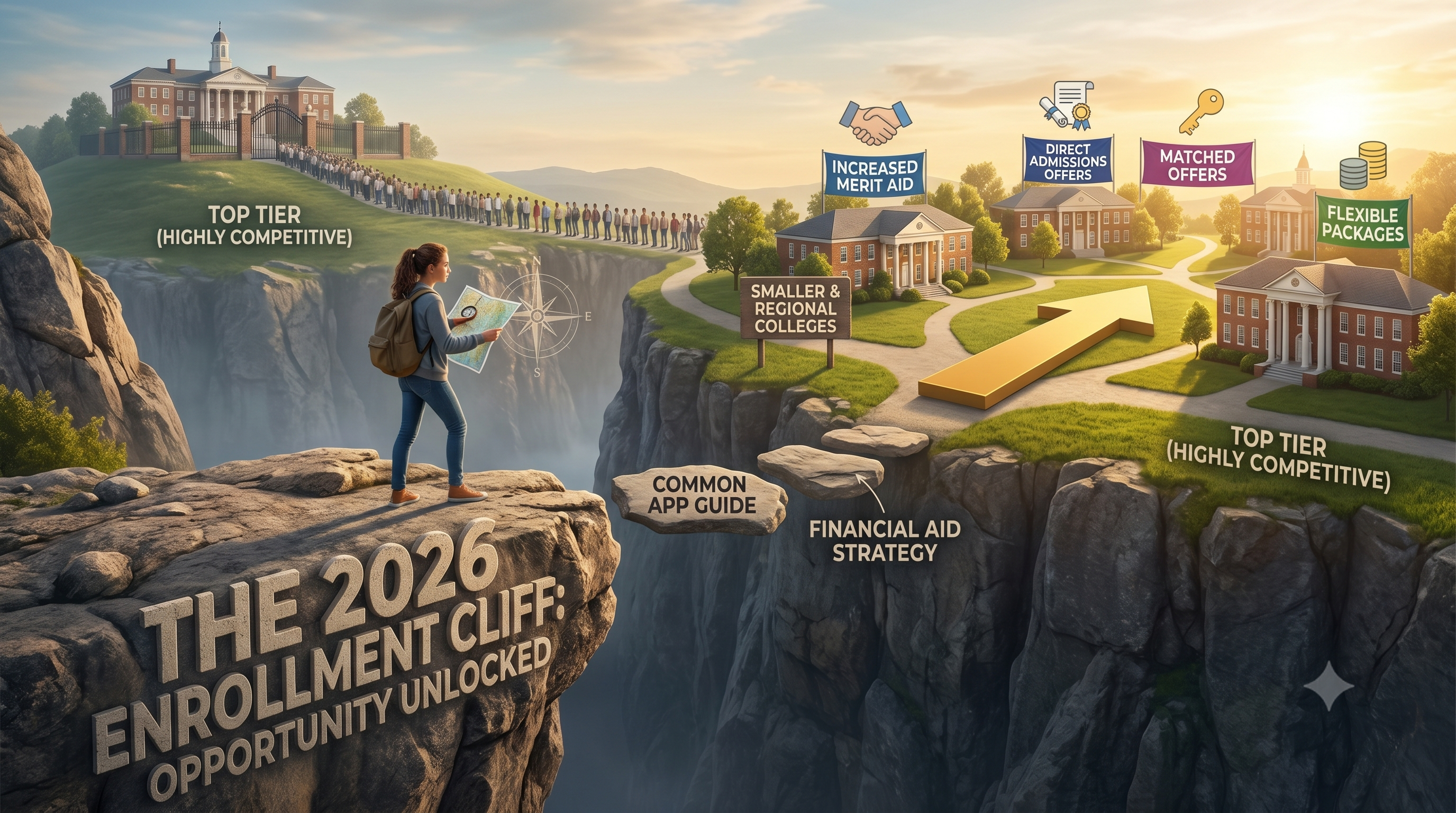
If you are a student preparing for the college application cycle that peak in 2026, you face a truly unprecedented landscape. You have likely heard the familiar refrains: "It's more competitive than ever," and "Top schools are impossible." While the elite, top-tier universities remain fiercely difficult to enter, a parallel reality is unfolding—one that hands significant leverage back to the applicant.
We are standing on the precipice of what demographers call the 2026 Enrollment Cliff.
This post will break down exactly what this demographic shift means and how you can use this knowledge to not only secure admission but potentially unlock a far better financial aid package than previously possible.
What is the 2026 Enrollment Cliff?
The "Enrollment Cliff" refers to a dramatic, projected drop in the number of graduating high school seniors, a statistical echo of the significant decline in birth rates during the Great Recession of 2008-2009. 18 years later, in 2026, there will simply be fewer students reaching college age.
For universities, this is a crisis of supply.
The Great Divide in Admissions
It is crucial to understand that the cliff does not impact all institutions equally. It has created a sharp divide:
- The Elite/Top-Tier: The Ivy League, Stanford, MIT, and elite regional counterparts remain functionally immune to the cliff. They receive vast numbers of applications and will always fill their classes. Demand here far outstrips supply.
- Smaller and Regional Colleges: This is where the landscape shifts dramatically. Many excellent private liberal arts colleges and smaller regional state universities are heavily dependent on tuition revenue. A smaller pool of high school graduates means intense, aggressive competition between these schools to attract a shrinking number of students.
This Is Your Leverage Point.
For a hardworking, qualified student, this dynamic turns the tables. While the top-tier may still feel like a lottery, the "solid B+" or "A-" student is suddenly a highly valued commodity for hundreds of institutions.
Strategizing for Success and Savings
Here is how you can pivot your strategy:
1. Shift Your College List (And Your Focus)
While it's fine to keep your "reach" schools, place your tactical focus on the strong regional universities and small liberal arts colleges that align with your major. Do not overlook institutions just because they lack national brand recognition. These are the schools most likely to offer you substantial merit-based aid to win your enrollment.
2. Embrace "Direct Admissions"
A direct response to the enrollment cliff is the rise of Direct Admissions. Instead of you sending an application and waiting for a decision, colleges are proactively offering spots to students before they even apply, based on minimal data (like GPA). Some states have already implemented direct admission systems. This simplifies the process and instantly provides guaranteed options.
3. Negotiate Your Financial Aid
The competition works in your favor. If you are accepted to multiple similar regional colleges, and one offers a better merit scholarship, do not hesitate to ask the other institution to match it. These schools have enrollment targets they must hit, and they often have flexibility in their financial aid budgets to secure the "right" student. Be polite, provide data (other award letters), and ask directly.
Navigating the Common App Correctly
No matter your strategy, the mechanics of applying must be executed perfectly. To leverage your options, your application needs to be clear, consistent, and error-free.
- Tip #1: Read Every Instruction. The Common App allows multiple forms (e.g., standard, honors college). Ensure you are filling out the correct version for your targeted program.
- Tip #2: Tailor the Supplemental Essays. While the main essay is common, individual schools have supplemental questions. Never reuse an essay word-for-word. Show that you have researched that specific campus and explain why it fits your goals.
- Tip #3: The Testing Policy is Critical. The 2026 environment will still see mixed test-optional policies. Confirm every deadline and rule. If your scores strengthen your case, submit them.
Final Thoughts: Look Across the Chasm
The 2026 admissions cycle will be defined by contrast. Do not get discouraged by the competition at the absolute top. Instead, look across the demographic chasm. Hundreds of excellent institutions are preparing to welcome you with open arms—and expanded financial packages. Your opportunity isn't shrinking; it's simply changing location.
Tags:
Get Weekly Insights
Join 10k+ parents getting smarter about education.


